

Experts have issued a warning against a common sleeping position that could pose health risks far beyond just a sore back.
While many people assume a preferred sleep posture is simply a matter of comfort, it has been argued that certain positions can trigger pain, acid reflux, snoring, and even nerve symptoms that show up the next morning.
“What we care about is if someone is comfortable in their sleep position. Oftentimes, we sleep in certain ways because of comfort,” clinical psychologist and behavioral sleep specialist Shelby Harris told Fox News Digital.
But she stressed that comfort doesn’t always equate to good health.

Experts have spoken out about sleeping positions. Credit: Vasil Dimitrov/Getty Images
Sleeping in awkward postures can leave the body motionless in potentially dangerous positions overnight, adding stress not only to nerves but also to muscles and ligaments.
Contrary to popular belief, experts also say that how someone sleeps doesn’t indicate their mental state, stress level, or emotional well-being.
“Someone’s sleep position means really nothing about their psychological state or tension or stress or trauma,” Harris said.
"T. Rex Position" Linked To Nerve Compression
One posture garnering particular concern is sleeping with arms bent or tucked close to the body, a variation of side sleeping dubbed the “T. rex position” on social media.
This position, where arms are curled up toward the chest, is linked to nerve compression that can cause numbness or tingling, according to a 2023 review of cubital tunnel syndrome, a condition in which people feel numbness and shooting pain in their forearms.
Health professionals note that, alongside numbness, this position can contribute to shoulder strain and stiffness over time.
Dr Deborah Lee, a sleep expert at Dr Fox Online Pharmacy, added that the position - common among side sleepers - “gives us a sense of comfort and security,” but also increases the risk of nighttime paraesthesias, the tingling or prickling sensation often caused by nerve pressure, per Daily Mail.
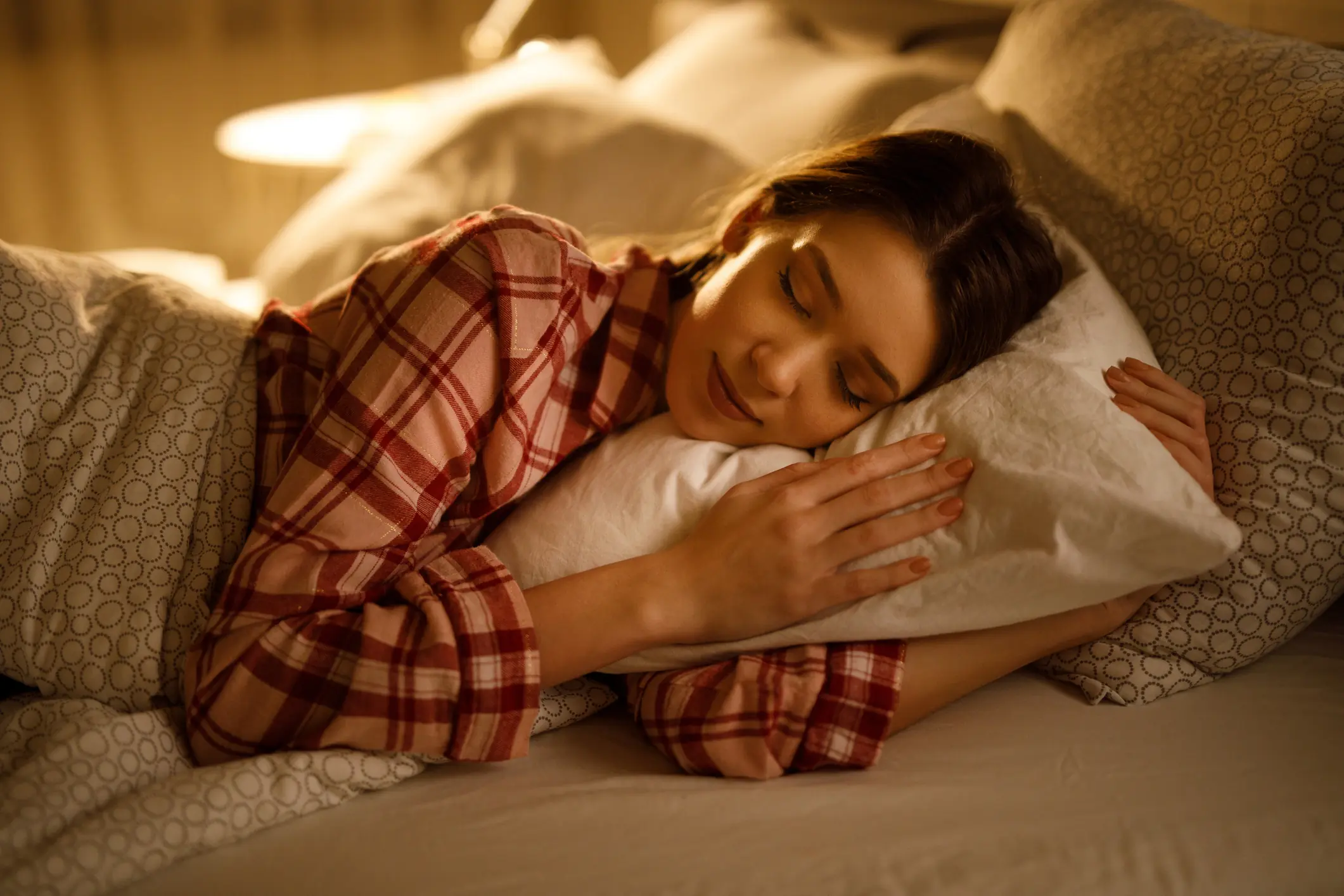
Sleeping on one's side with bent arms curled close to the chest has been dubbed the 'T-Rex position' on social media. Credit: EmirMemedovski / Getty
What Your Sleep Position Means For Your Body
While side sleeping is generally recommended for overall spinal alignment and pressure relief, not all variations are equal.
Dr Lee says the “pencil” version of side sleeping, with arms down by the body, is preferable, as it avoids bending at the elbow or wrist and helps keep pressure off joints. A side sleeper pillow can make this posture more comfortable, she noted.
Another common variation is the foetal position, where the knees are curled up toward the chest.
It is believed that this posture is widespread and can be relaxing for many, potentially lowering snoring and providing comfort for back pain. However, curling too tightly may restrict deep breathing or cause joint stiffness.

A woman sleeping in a foetal position. Credit: Holly Wilmeth / Getty
Back sleeping also has its benefits and drawbacks, as Harris pointed out that sleeping on your back can help keep arms untucked, potentially reducing nerve compression issues. However, the position may contribute to snoring and acid reflux.
Sleeping on your stomach is the least common position yet also the most problematic, as the Sleep Foundation says lying face-down can misalign the spine and cause back, neck, and shoulder pain because the head must be twisted to one side for breathing.
Dr Lee also warns against “frontal” or stomach-related positions that twist the spine, including half-stomach sleeping, where one leg is higher than the other and one arm bent under a pillow.
These postures risk compressing the cervical spine, which can cause neck, arm, and shoulder pain the next day.

Experts warn against sleeping on the stomach. Credit: FreshSplash / Getty
How to improve your sleep posture
Several medical centers and sleep resources recommend gradually transitioning to side or back sleeping.
Using thinner pillows, or none at all, can also help those who struggle to give up stomach sleeping reduce neck twist and lumbar arch.
Christian Moro, professor of science and medicine at Bond University in Australia, suggests letting the body move naturally during the night.
“In most cases, the body will move around during the night, which helps to avoid any pain sensations or uncomfortable sleeping positions,” he said.
Still, he advises that persistent pins and needles or dead-arm sensations are signals that it’s time to reconsider your sleeping position, as these signs often indicate restricted blood flow.